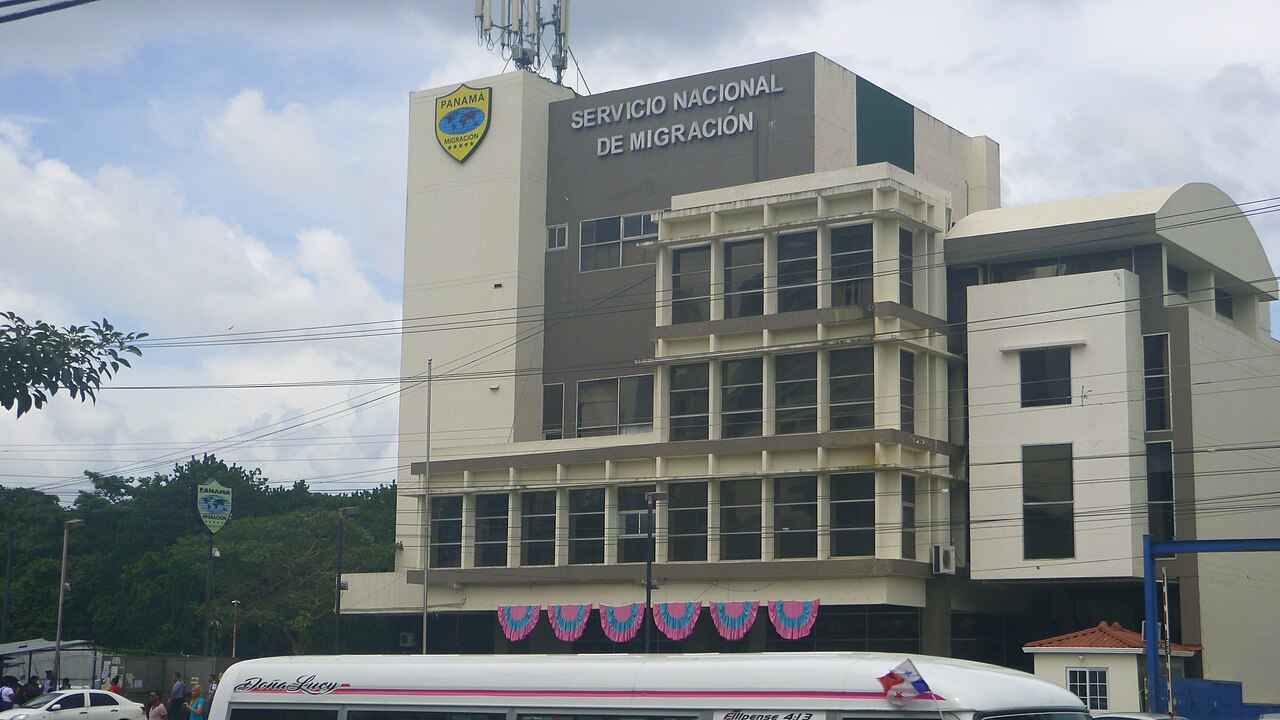
If Panama’s National Migration Service (Servicio Nacional de Migración) detains you because your status is irregular, you have rights: you can contact a lawyer, your family and your consulate, and Migration must hear your defense before ordering your deportation. What helps most is proving that you live in Panama and have ties here, and that is built with documents. This guide explains what the law says and which papers to gather.
Why Migration can detain a foreigner
Panamanian law provides that the National Migration Service deports foreigners who entered irregularly or who remain in the country undocumented or in an irregular situation (Decree Law 3 of 2008, article 65). To hold these people at its disposal, Migration operates short-stay preventive shelters (article 93).
Being in a shelter does not mean you committed a crime. It is an administrative measure tied to your immigration status.
What Migration must do before deporting you
Article 66 of Decree Law 3 says that, before ordering a deportation, Migration must:
- Verify the facts behind it.
- Hear the foreigner’s defense, in person or through a lawyer.
- Respect the person’s human rights and fundamental guarantees.
- Decree the detention and notify that decision to the person personally.
- Seek to protect the best interests of minors and family unity.
The decision ordering deportation must also be served personally.
Your rights inside the shelter
- Contact a lawyer, a relative and your consulate. This is set out in article 94 of Decree Law 3. Migration must inform the diplomatic or consular representatives of your country.
- Treatment that respects human rights. The regulation (Executive Decree 320 of 2008) requires shelters to operate continuously and meet minimum standards of sanitation and food, and to place each person in the section that corresponds to gender or physical condition (articles 317 and 318).
- Limited stay. The same regulation defines shelters as short-stay facilities, for a maximum of eighteen months.
- Minors. Only people over 18 may be housed in the shelters. Minors are placed under the protection of the Ministry of Social Development.
Where the shelters are and how visits work
Hours change: always confirm before you go, with Migration or with your lawyer.
Women’s shelter (Administrative Migration Detention Center for Women). It is in Calidonia, on Avenida Cuba and 25th Street. View on Google Maps. In practice:
- On Mondays, detainees are allowed to use a cell phone for 15 minutes.
- On Thursdays, visits are allowed from 12:00 to 2:00 p.m.
- According to the sign at the entrance, cell phones are not allowed inside, and visitors must wear a blue sweater and cannot bring belongings.
- According to the same sign, lawyers may enter Monday through Friday during set hours, and belongings for detainees are received on Mondays and Fridays from 9:00 a.m. to 12:00 p.m.
Men’s shelter. It is in Altos de Curundú, toward Llanos de Curundú. View approximate location on Google Maps. There is no officially published visiting schedule, so check first with Migration or with your lawyer.
The reconsideration appeal
A deportation order can be challenged with a reconsideration appeal (recurso de reconsideración). The law says it is granted with suspensive effect and that it exhausts the administrative route (articles 67 and 96 of Decree Law 3). It must be filed within five business days after notification, through a legal representative.
In practice, the appeal works best when the person can be released and shows ties to Panama and grounds to apply for a residence permit. One example is having a Panamanian child. That is why it pays to have the documents ready before they are needed.
How to prepare: proof of address and ties
1. Prove where you live
Gather at least one of these:
- A lease agreement.
- A utility bill in your name: electricity, water or internet.
- If you have neither, a note from another person stating that you live at the same address. It works as an address authorization letter.
2. Prove your ties to Panama
“Ties” (arraigo) means the connections that bind you to Panama. You can show them with:
- Birth certificates of your children born in Panama.
- A marriage certificate.
- School or study records, if you are studying.
3. If you work, put your employment in order
If you have a job, take the steps with the Ministry of Labor, for example registering the employment contract. This shows that you have ties to the country or an ongoing obligation here.
Keep copies of all of these documents and leave a set with a relative or someone you trust who can hand them to your lawyer.
What happens if deportation is ordered
A deported person cannot re-enter Panama for five to ten years, counted from the date the deportation is carried out. If the person evades the measure and stays hidden, or re-enters without authorization, the ban becomes indefinite (article 69). For staying irregularly, the regulation’s table sets five years.
Where the law allows it, Migration may authorize voluntary return if the person or a third party covers the costs (article 68).
Deportation and expulsion are not the same. Expulsion is for more serious cases, such as a conviction for an intentional crime or a threat to public order (article 71). An expelled person cannot return to the country, and if they re-enter they will be expelled permanently (article 72).
If you want to leave on your own. A foreigner who has committed an immigration violation cannot leave the country without first paying the corresponding fine. If the person cannot pay it, deportation proceeds (article 42). That is why it is worth getting advice before trying to leave.
If a family member was detained
The first step is to contact an immigration lawyer, because the appeal deadline is short. In the meantime, gather the address and ties documents listed above. The law also recognizes the detained person’s right to contact family and their consulate.
What to do now
Every case is different: it depends on how the person entered, their family in Panama and the documents they hold. This article is informational and does not replace advice from an attorney.
If you or a relative is detained, or you want to prepare in advance, message me directly on my phone and we will review your case.
 Message me on WhatsApp
Source: Decree Law 3 of 2008 and Executive Decree 320 of 2008, consulted on November 4, 2026. Rules may change; confirm them with Migration or with your attorney.