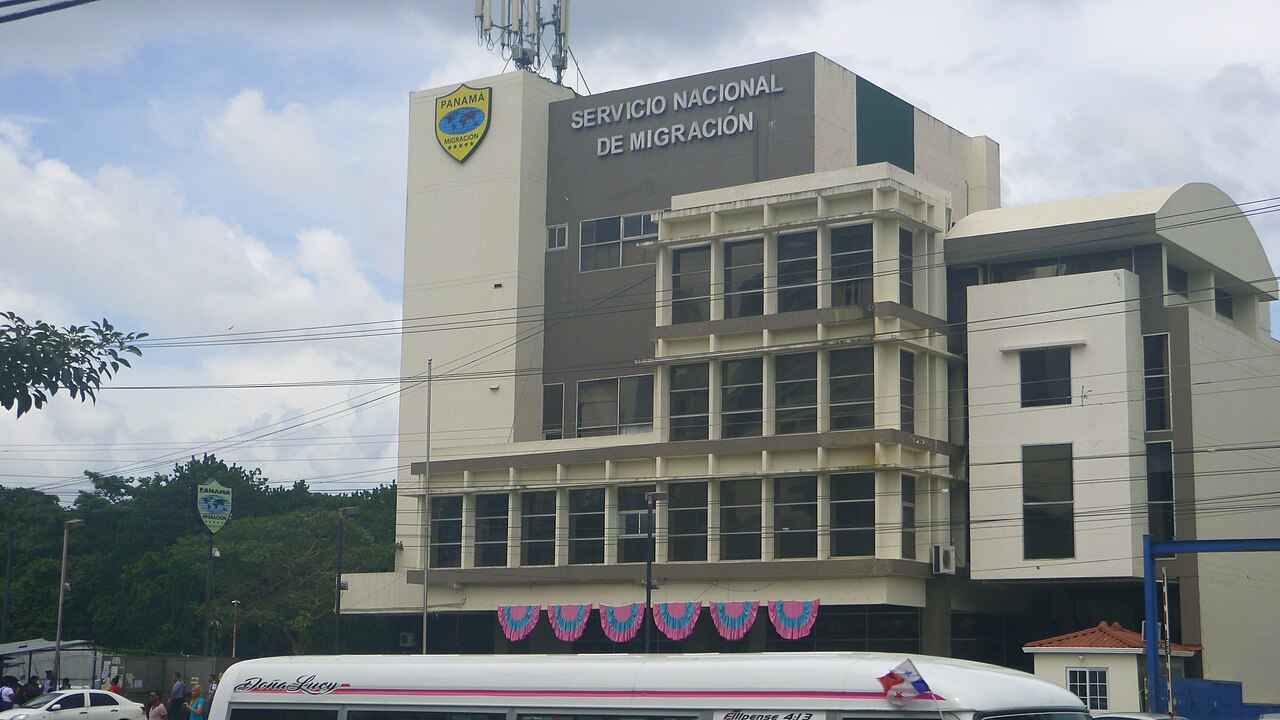
If you have been living in Panama without legal status for more than a year, the Humanitarian Security Protection Permit (PPSH, for its Spanish initials) is the route to regularize your situation and work legally. The deadline to file the application is March 13, 2027. This guide gathers what the decrees and Immigration say, and the points I repeat most to my clients, so you can prepare your documents in time.
In short
- You can apply if you are in irregular status and have been in Panama for at least one year.
- The permit includes a work permit, lasts two years and can be extended for six more.
- The application is filed through an attorney, with documents and payments that are best prepared calmly.
- If you do not file before March 13, 2027, this opportunity closes.
What the PPSH is and what the March 2027 deadline means
The permit was created by Executive Decree No. 6 of March 11, 2025 (Official Gazette No. 30236). In March 2026, Executive Decree No. 5 of March 13, 2026 (Official Gazette No. 30482) amended it and extended by one year, counted from its publication, the deadline to file applications. That is why the cutoff is March 13, 2027.
Please note: that date is the closing date to file the application, not the expiration date of the card of someone who already has one. Each permit expires according to its own card.
The decree provides that the permit is granted individually, that it includes the Ministry of Labor’s authorization to work right away, and that both permits are valid for two years. After that, you can request a six-year extension and, when the extension ends, permanent residence.
Who can apply
According to the decree and Immigration’s requirements sheet, any foreign national may apply who:
- was in irregular status in the country when the decree took effect, and
- has stayed in Panama for no less than one year. If you left during that year, you cannot have been outside the country for more than 60 consecutive days.
The decree also allows people to apply who were not admitted as refugees by the National Office for Refugee Assistance (ONPAR). And anyone who obtained the temporary protection permit under Decree 112 of 2023 can request the six-year extension.
Five key ideas from my interview
I discussed this topic in a video interview. You can watch it here:
These are the five ideas I repeat most:
- Time is what counts. Arriving is not enough: one year in the country is required. If you arrived recently, check your date of entry before counting on this permit.
- Two years with a work permit. The card shows the immigration category on the front and the work permit on the back, and it can be extended. Unlike the earlier permit, the work permit is included from the start.
- Immigration checks the criminal record from your country of origin. The certificate is submitted apostilled or authenticated, and it is verified.
- Minors have their own rules. They pay less, but the power of attorney must be signed by both parents, and foreign documents must be apostilled. If one parent is in another country, plan the time needed for the signature and the apostille.
- Beware of fake lawyers and fixers. Some only lend an attorney’s signature, and the procedure is handled by someone who is not licensed. Always verify who you hire, as I explain in the guide on how to verify a lawyer.
Documents required by the decree
Decree 5 of 2026 requires these documents for the initial application. They are the same ones I attach to my filings:
- Power of attorney and application through a legal representative.
- Two passport-size photos, white or color background.
- Foreign Nationals Single Pre-Registration (RUEX), completed or updated.
- A complete copy of your passport, notarized.
- Proof of address: a notarized lease (with a copy of the tenant’s ID or passport), a utility bill, or a certification from the Community Judge.
- Criminal record certificate from your country of origin, authenticated or apostilled.
- Sworn statement of personal background.
- Health certificate issued by a licensed professional.
- A copy of your migrant labor registration with the Ministry of Labor and Labor Development.
- Certified or manager’s check from Banco Nacional, payable to the National Migration Service, for B/.800.00 as repatriation.
- Certified or manager’s check from Banco Nacional, payable to the National Migration Service, for B/.250.00 as immigration service fee.
- Payment of B/.100.00 for the ID card and multiple-entry visa.
- Ministry of Labor and Labor Development payment receipt for B/.100.00 as work permit fee.
In addition, the decree requires that you have no pending or open immigration procedures before Immigration. If the applicant is a minor, the notarized power of attorney is granted by both parents or the legal guardian, together with a document proving the relationship and an authenticated or apostilled letter of responsibility.
How much it costs
According to the fee table in Decree 6 of 2025 and the conditions in Decree 5 of 2026:
| Item | Adult | Minor |
|---|---|---|
| Immigration service (certified or manager’s check from Banco Nacional, payable to the National Migration Service) | B/.250.00 | Not applicable |
| ID card and multiple-entry visa | B/.100.00 | B/.100.00 |
| Repatriation, non-refundable (certified or manager’s check from Banco Nacional) | B/.800.00 | Not applicable |
| Work permit (Ministry of Labor receipt, payable to the National Treasury) | B/.100.00 | Not applicable |
That adds up to B/.1,150.00 for an adult’s immigration procedure, plus B/.100.00 for the work permit. For a minor, the cost is B/.100.00. Attorney fees and notary costs are added on top; the decree does not set them.
The six-year extension
After the two years, anyone who wants to continue must request the extension. Decree 5 of 2026 requires, among other things:
- Power of attorney and application, two photos, notarized passport and proof of address.
- An updated copy of the migrant labor registration.
- Sworn statement of personal background and a health certificate.
- Criminal and police record from the Judicial Investigation Directorate (DIJ), as long as you have not left the country for more than 30 days.
- A social security record showing that you contribute to the Social Security Fund (Caja de Seguro Social), or a tax return with its proof of payment before the General Revenue Directorate (DGI).
- The payments: B/.250.00 immigration service and B/.100.00 ID card for an adult; B/.100.00 for a minor; and B/.100.00 for the work permit.
This means that, during the first two years, you must reach this step with your tax or social security obligations in order. It is not only Immigration: the Ministry of Labor and the DGI are involved as well.
After the extension: permanent residence
When the extension ends, the decree allows you to request permanent residence, with its own requirements depending on the basis: family ties (for example, married to a Panamanian or a dependent of a permanent resident), work (social security record or tax return), or tax (registered with the DGI and with your returns up to date). If you plan to switch categories earlier, for example through marriage to a Panamanian, review your case first: changing permits can affect what you already have.
Mistakes worth avoiding
- Leaving the procedure until March 2027. Gathering apostilles, records and both parents’ signatures takes time.
- A criminal record certificate that is not apostilled or authenticated.
- Leaving the country for more than 60 days during the required year of stay.
- Hiring an unlicensed fixer who only uses an attorney’s signature.
- Forgetting the tax or social security obligations that are checked at the extension.
Frequently asked questions
Is the March 2027 deadline when my permit expires?
No. It is the deadline to file the application for the PPSH. Your permit expires according to the card you are given.
Do children pay the same as adults?
No. The decree sets B/.100.00 for minors, for the card and multiple-entry visa. The documents and both parents’ signatures are still required.
Do I get a work permit?
Yes. The permit includes the Ministry of Labor’s authorization, which is why the B/.100.00 receipt is paid.
Can Immigration interview me?
Yes. The decree allows Immigration and the Ministry of Labor to hold an optional interview or evaluation before deciding.
What to do now
If you have been in Panama for more than a year and want to know whether you qualify, message me directly on my phone and we will review your case calmly, before the deadline gets close. To understand how the process is organized in general, read how procedures work before the National Migration Service.
For more information, you can also read the iurispa guides: Humanitarian Security Protection Permit (PPSH) in Panama and PPSH renewal: six-year extension.
This article is informational and does not replace advice from an attorney.
 Message me on WhatsApp
Sources: Executive Decrees 6 of 2025 and 5 of 2026 (Official Gazette 30236 and 30482) and the National Migration Service requirements sheet, consulted on November 6, 2026. Requirements and costs may change; confirm them with Immigration or your attorney before filing.